How to Transfer or Surrender License Plates in Nebraska
Managing your vehicle registration properly is essential when you sell a car, move, or change ownership. In Nebraska, understanding how to transfer or surrender license plates can help you avoid penalties, stay compliant with state laws, and keep your records accurate. Whether you’re upgrading your vehicle or simply no longer need your plates, this guide will walk you through everything you need to know.
If you’re researching plate history or ownership details, tools like a Nebraska license plate lookup can also provide helpful background information.
Understanding License Plate Ownership in Nebraska
In Nebraska, license plates are typically assigned to the vehicle owner, not the vehicle itself. This means that when you sell or trade in your car, you may be able to transfer your existing plates to a new vehicle rather than surrendering them.
The Nebraska Department of Motor Vehicles (DMV) oversees all vehicle registrations, plate transfers, and surrender processes. Following their guidelines ensures that your registration remains valid and that you avoid unnecessary fees or legal issues.
When You Can Transfer License Plates
Transferring license plates in Nebraska is common and often encouraged. You can transfer your plates in the following situations:
- Buying a new or used vehicle
- Trading in your current vehicle at a dealership
- Replacing a totaled or stolen vehicle
- Switching vehicles within your household (in some cases)
The key requirement is that the plates must remain registered to the same owner (or eligible family member, depending on the situation).
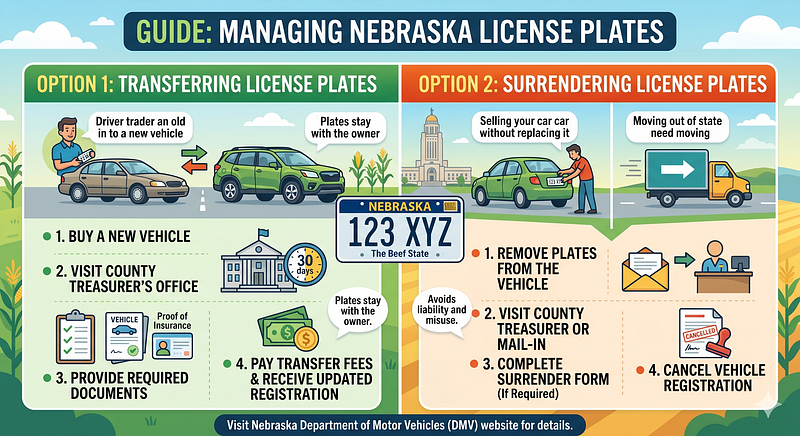
How to Transfer License Plates in Nebraska
The process of transferring plates is relatively straightforward, but it must be completed within a specific timeframe.
Step 1: Purchase or Acquire a New Vehicle
Once you buy a new or replacement vehicle, you can initiate the plate transfer process.
Step 2: Visit Your County Treasurer’s Office
In Nebraska, vehicle registration is handled at the county level. You’ll need to go to your local County Treasurer’s office to process the transfer.
Step 3: Provide Required Documents
Bring the following:
- Your current license plates
- Vehicle title or bill of sale for the new vehicle
- Proof of insurance
- Valid ID
- Odometer disclosure (if applicable)
Step 4: Pay Applicable Fees
There is usually a small transfer fee, along with any difference in registration costs depending on the new vehicle.
Step 5: Receive Updated Registration
Once processed, your plates will be reassigned to your new vehicle, and you’ll receive updated registration documents.
Time Limits for Plate Transfers
Nebraska typically allows a short window — often 30 days — to transfer your plates after acquiring a new vehicle. During this time, you may be allowed to drive legally using your existing plates, provided you carry proper documentation.
Failing to transfer within this timeframe may require you to register the vehicle as new and obtain new plates, which can be more expensive.
When You Need to Surrender License Plates
There are situations where transferring plates isn’t possible or appropriate. In these cases, you may need to surrender your plates.
Common scenarios include:
- Selling your vehicle without replacing it
- Moving out of Nebraska
- Canceling vehicle registration
- Switching to a different plate type that cannot be transferred
Unlike some states, Nebraska does not always require mandatory plate surrender, but it is often recommended to avoid confusion or misuse.
How to Surrender License Plates in Nebraska
If you decide — or are required — to surrender your plates, follow these steps:
Step 1: Remove Plates from the Vehicle
Always remove your license plates before selling or disposing of a vehicle.
Step 2: Visit the County Treasurer’s Office
Bring the plates to your local office. Some counties may also allow mailing them in, but it’s best to confirm in advance.
Step 3: Complete a Surrender Form (if required)
You may need to fill out a form confirming that you are voluntarily surrendering your plates.
Step 4: Cancel Your Registration
Ensure that your vehicle registration is officially canceled to avoid future tax or liability issues.
Do You Get a Refund After Surrendering Plates?
In Nebraska, refunds for unused registration time are not always guaranteed. However, in certain cases — such as early cancellation — you may be eligible for a partial credit or refund.
Check with your local County Treasurer’s office to determine whether your situation qualifies.
Special Plates and Transfer Rules
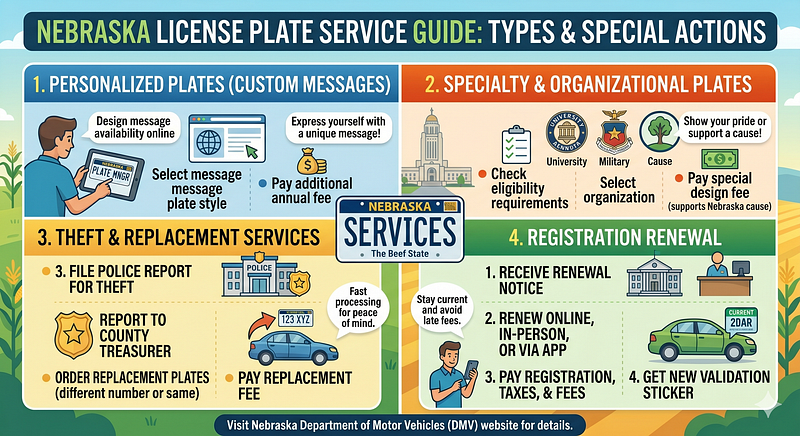
Nebraska offers a wide range of specialty and personalized plates, including:
- Military plates
- University plates
- Personalized message plates
- Organizational plates
These plates often have unique rules:
- Personalized plates can usually be transferred if the same owner keeps them.
- Specialty plates may require requalification or additional documentation.
- Some plates cannot be transferred and must be surrendered.
If you’re unsure, it’s best to confirm with the DMV before attempting a transfer.
Avoiding Common Mistakes
Many drivers run into issues during plate transfers or surrender due to simple mistakes. Here are a few to avoid:
- Leaving plates on a sold vehicle
This can lead to liability if the new owner misuses the vehicle. - Missing the transfer deadline
Late transfers may result in additional fees or the need for new registration. - Not canceling registration
This could lead to continued tax obligations or penalties. - Assuming all plates are transferable
Some specialty plates have restrictions.
Using a Nebraska License Plate Lookup Tool
If you want to verify plate information, ownership history, or registration status, using a Nebraska license plate lookup tool can be extremely helpful.
You can learn more or perform a lookup here:
???? https://nebraskalicenseplates.com/
These tools are especially useful when:
- Buying a used vehicle
- Checking for title or registration issues
- Verifying vehicle details before transfer
What Happens If You Don’t Transfer or Surrender Plates?
Ignoring plate responsibilities can lead to several problems:
- Fines or penalties
- Suspended registration privileges
- Liability for tickets or violations
- Confusion in ownership records
Nebraska takes vehicle registration seriously, so it’s important to handle plate transfers or surrender promptly.
Moving Out of Nebraska
If you’re relocating to another state, you should:
- Register your vehicle in your new state
- Surrender or properly dispose of your Nebraska plates
- Cancel your Nebraska registration
Each state has its own rules, so be sure to comply with both Nebraska and your new state’s requirements.
Final Thoughts
Transferring or surrendering license plates in Nebraska is a manageable process when you understand the rules and act within the required timeframe. In most cases, transferring your plates to a new vehicle is the simplest and most cost-effective option. However, when that’s not possible, properly surrendering your plates ensures you avoid unnecessary complications.
By staying organized, keeping track of deadlines, and using helpful resources like a Nebraska license plate lookup, you can navigate the process with confidence and keep your vehicle records in good standing.